Rooftop solar is the most efficient power source, and the cheapest as well.

house with solar

My solar array will pay for itself in less than 5 years. The ROI on solar is no longer 10 to 15 years. If someone tells you that they are flat out wrong.

Most of the electricity in Florida is created by burning natural gas, burning coal, or generated via a fission reaction at nuclear plants. That power has to be transmitted  hundreds of miles across power lines at high voltage to meet the power needs for the 21 million residents of this state.

Electricity takes 2 forms; Direct Current and Alternating Current. Both forms of electricity bleed off power the farther they travel, more so with Direct Current. The modern power grid generates and distributes Alternating Current, but there is still a huge loss of wasted energy.

Rooftop solar generates in Direct Current, is inverted to Alternating Current, then most of that electricity is used onsite at your home.

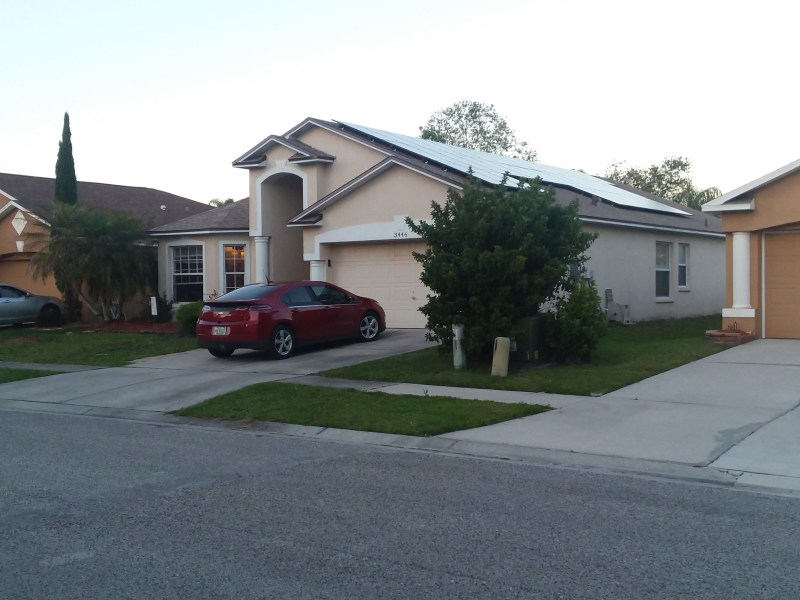
The picture above is my home in Wesley Chapel. The electricity on my roof does not have to travel more than 30 or 40 feet from source to end usage. My home is still tied to the power grid, during a sunny day it generates more than I need, and those kilowatts go back to the electric company and I get a 1 for 1 credit per kilowatt.

In the winter my kilowatt credits build up, when the summer months start and my air conditioning is using more power those credits come back to me.

My solar array is already paid off, so now I have an asset on my roof that will kick off $200 per month in electricity for the next 40 to 50 YEARS. My panels were manufactured by SolarWorld, with a 25 year warranty.

If I sell my home I can sell it for more, probably to a buyer who drives an electric car. As more people start buying electric cars there will be an increased demand for homes that self generate electricity.

Why not charge your car off your roof?

Ben Alexander

June 2018
Job security for the next 40 years.

front of roof

This post is written specifically for the 20-something kid who’s just finished college and  has no idea what they want to do with their lives.

There are some professions known for a high income; hedge fund manager, medical sales, brain surgeon, etc. There are also professions that help society but the pay is minimal; school teacher, social worker, admin at a non-profit, etc.

Some jobs will go away as technology becomes more advanced… many jobs have been eliminated by technology; Blockbuster store manager, travel agent, highway toll collector, the list goes on…

If you get into the solar business you can help society AND make a decent income.

For the next 4 decades the solar biz will need installers and electricians, crew leaders, sales people, sales trainers, accountants, warehouse managers and general managers. Those jobs are all on the install side of the business, even if the panels and inverters are shipped in from overseas there will be many LOCAL jobs that can’t be outsourced.

LESS THAN 1% of the residential and commercial market has solar on the roof nationwide, our potential clients are anyone with a roof and a monthly electric bill!

I should add that solar is now cheaper each month than paying the local electric company… panel prices dropped until 2016, and now have leveled off.

As the Sales Director for Tampa Bay Solar I’m going to hire talented salespeople for the next 30 years at least, and many will earn a solid six-figure income IF they are willing to put the work in to learn the business. I’m encouraging all my sales reps to learn about solar by going on install a few days each week while they also learn how to sell.

My goal is to build my sales team to $1 mil per month in gross sales, and we’ll get there soon.

TampaBaySolar.com is also hiring installers, electricians and crew chiefs… with open positions for the next decade or so….

Don’t stay in a stagnant industry, jump into solar and be a part of the future!

Ben Alexander

May 21, 2018

APRIL, 2018.

My little house, Chevy Volt in the driveway, with 10.2 kW of solar on the roof…house with solar

This has been a big month. On Monday, April 2nd I sat down with Randy Crain and signed the paperwork to finalize the sale of Balloon Distractions.

BD had been in my life for 14 years and 7 months, and with one stroke of a pen (and a check from Randy) I was no longer a shareholder.

I had been neglecting the balloon business since early 2017 when I started working with Tampa Bay Solar. If Randy had not bought me out the entire business might have just faded away to nothing.

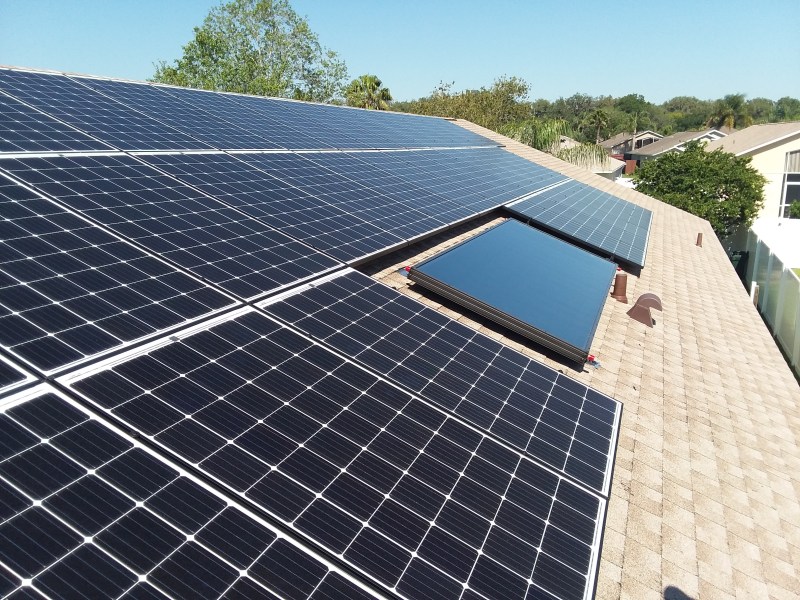
The day after I sold BD I had one of my biggest days in solar, with 2 deals closed. I took that as a sign from the universe… a few weeks later I finally got solar on my roof, I had been waiting to replace the roof before my system was installed, here is a close up:

front of roof .jpg

The multiple photovoltaic panels produce $200 per month in electricity, while the longer panel in the middle heats the water for my home and stores it in an 80 gallon Rheem storage tank in my garage.

Elsewhere in the solar biz TBS landed the Citrus County Co-op contract, this gives Tampa Bay Solar the chance to get in front of about 100 homeowners who are highly interested in getting a system… and I get to be the point man on the project. This means I’m in Citrus County a few times a week to close deals at a reduced rate. Not bad work, if you can get it.

This month was really the conclusion of a specific chapter in my life. When I started BD I was 29 years old, with 2 daughters in elementary school. As I start this new chapter my daughters are now in college, and I’m doing something that has purpose AND profit. Balloon Distractions was just about profit, I was never a fan of balloon twisting or anything that went with that!

I’ve been a green tech enthusiast going back to 2001 when I sold the first generation Prius at Antwerpen Toyota up in Clarksville Maryland. Now that I’m fully immersed in the solar business (representing the right company) I feel like I’m where I need to be, at the right place and the right time.

Unless they stop manufacturing solar panels I have a limitless opportunity to earn a living, I’ve learned so much about the solar business in the past year, closing deals for everything from photovoltaic arrays and battery back-ups to pool heaters and solar pool pumps.

-Ben Alexander

April, 2018

The Electric company in 2050.

For most of his career my father worked at a nuclear reactor in southern New Jersey, previous to that he was a lineman for PSE&G, the main electric utility in NJ. Now that I’m in the solar business with Tampa Bay Solar we have some interesting conversations; not only about energy, but also about electric cars and some of the other changes coming down the line.

The traditional electric company business model was to generate and deliver electricity. Most of the power in the United States comes from a mix of nuclear, coal and now natural gas generation facilities.

Out of 100 million homes across the United States about 1% currently have some form of rooftop solar. Here in Florida solar panels generate power from about 9AM to 6PM (depending on the season) and some of that power gets sent back to the grid via a bi-directional meter.

If you do not have solar your meter only measures power from the electric company to YOU, with a bidirectional meter you can send kilowatts back to the electric company for a 1 for 1 credit. My Dad has a small 14 panel system on his roof, last month his system pushed 75 kilowatts (kW) back to the grid.

Dad still has to pay a minimum connection fee of $30 per month to the electric company, because his system draws power from the utility at night.

This is also known as net metering, and it works well here in Florida.

As more homes install rooftop solar there will be a need for energy storage during the peak daylight hours, and one way to implement this is through the use of plug in electric vehicles. My 2013 Volt has a 16 kilowatt battery, the newer Tesla models have 100 kilowatt batteries, and in the next few years cars with 200 kilowatt batteries (or larger) will become commonplace and affordable.

An affordable electric car with a 200 kW battery will have a 500 mile range per daily charge. These cars will be expensive as new models (in the $30,000 range) but on the used market they will go for the same price as a used 4 cylinder car like a Camry or Accord.

Imagine several million cars each plugged into the grid on a daily basis with 200 kW of storage capacity per vehicle. Some of these vehicles can charge at night (when electricity is cheaper and more plentiful) and sell back to the grid during peak usage.

My point? We will still need the electric company to move power from rooftops to charge stations to the rest of the grid. We still need a hard wired grid, but for different reasons.

The electric company in 2050 will manage the flow of energy, probably in some type of open marketplace that trades energy credits back and forth. Your car can sell 50kW back to the grid during the daytime, so will your rooftop solar. At night you can get those credits back.

I don’t mind paying a small monthly fee to the grid, especially if it allows me to sell energy back to the system in peak demand times.   

Some homes will never have solar, either because the homeowner refuses to install it or there is too much shade around the home. Older homes in communities with mature trees are normally not viable for solar.

In the next decade the electric company should see an increase in demand as more electric cars replace gas powered vehicles.

Demand for electricity will also increase as new communities are built. Here in Florida there is new residential and commercial construction all over the place. People are still moving to the sunshine state in droves.

The traditional electric utility will have to evolve, and the best way to do that is to add value to the marketplace in such a way that your customers don’t mind paying a modest fee on a monthly basis.

Ben Alexander

January 2018.

Bolting around…

About a week ago I got a text from Tim at Wesley Chapel Chevy: “Ben, I got a new Bolt in stock, come over and check it out.”

I bought a used 2013 Chevy Volt from Tim in January of 2017, and I had asked him to let me know when the all electric Bolt arrived on the lot. My 2013 Volt is a plug-in electric car with a gas generator, 35 miles of electric range, about 285 miles on gas alone.

As you can see from the picture above the Bolt has 238 miles of range, NO gas engine at all. Like the Tesla or the Nissan Leaf this is the real deal.

My 2013 Volt is fast, but the new Bolt is REALLY fast. It jumps off the line like a jack rabbit, feels solid on the road, and I was very impressed. MUCH faster than any four cylinder gas powered vehicle, and probably even faster than most cars with a V-6!

The only electric car faster than the Bolt, that I’ve driven, is the Tesla Model S. I’ve test driven the Cadillac ELS, the Leaf, the Prius (ugh) and even the Fiskar Karma…. the Bolt beats them all, hands down.

The Bolt sells in the $30,000 range, which means used versions of this car will be on the market in the next 2 years for under $20,000.  

This means that the new Bolt can be a car for the masses, in some households a gently used Bolt will replace that old 4 cylinder Camry or Accord. If a Prius driver takes a look at the Bolt they will be blown away by the amazing acceleration.

The new Chevy Bolt is a game changer, most middle class people will never pony up $70,000 for a Tesla, but the Bolt puts a great electric car in the range of anyone who makes an average middle class income. If there are 2 cars in your household the Bolt can be used for commuting to work, while you can use your gas powered Ford Explorer to visit Grandma in Atlanta next weekend.

If you look at most married couples earning 2 incomes there is always one partner with a shorter commute, maybe 40 miles each way to work. With 238 miles of range the Bolt can cover that round trip easily, with another 140 miles of range for errands. If you charge your Bolt every night you will wake up every morning with another 238 miles of range.

I sell solar here in Tampa Bay for a living, so cars like the Bolt give solar buyers yet another reason to get solar on their roof.

Your new Bolt can run 100% on sunshine….

The future is here folks, brought to you by Chevy, who woulda thunk?

-Ben Alexander

TampaBaySolar.com

October 10, 2017

UK bans gas powered cars by 2040.

The picture above illustrates the smog problem in London.

This week in the United Kingdom the government announced a ban on the sale of new fossil fueled vehicles by the year 2040. There are 31 million registered vehicles in the UK right now, and the ban does not take place for another 23 years, but it signals to car manufacturers globally that they have to develop more alternative / electric powertrain technology if they want to keep selling vehicles in the UK.

The government in India has enacted a similar ban by the year 2030. There are over 60 million cars and trucks in India today, with robust growth in car ownership expected over the next 13 years.

As a country India is rapidly expanding their solar infrastructure as well, there are currently more than 300 million people in India who lack access to the power grid. The uptake of solar will improve countless lives, and this power source goes hand in hand with 100 million electric vehicles on Indian roads.

In 2016 over 350,00 new electric vehicles were registered in China, compared to about 150,000 new electric vehicles here in the United States. In 2016 across China 36 gigawatts of solar capacity was installed, compared to 14 gigawatts of new solar here in the United States.

Here is the current mix:

China has the most solar, followed by Japan, Germany and the USA.

The growth of solar installations and electric cars in England, India and China is not only driven by the federal government, but also by air pollution concerns in the major cities of these three countries. This is a good day / bad day in Beijing:

We don’t have as many air quality concerns here in the United States, with 320 million people in this country we are not as densely populated (per square kilometer) as China with 1.3 billion and India with over 1 billion people.

The city of Wuhan has a larger population that New York and Chicago combined!

The rest of the world seems to be ahead of the United States in regards to the uptake of green technology. China has to adopt electric vehicles because of the poor air quality in their cities.

Florida is still pretty slow in terms of adopting solar, but I’m going out there every day and spreading the word. Yesterday I sold 2 residential solar installs right here in Tampa Bay. Green tech has to make economic sense for the consumer, both of my sales yesterday were to conservative police officers!

100 million homes in the USA, only about 1% have solar today. BIG opportunity there.

Ben Alexander

July . 2017

Freedom to choose.

Every Tuesday night I head over to New Tampa to attend the weekly meeting for  Life Leadership. I’ve been involved in LIFE since 2014, at times building the business, at other times just as a student of the leadership and debt free material.

Part of my recent success with Tampa Bay Solar has to do with what I’ve learned in the LIFE business, I’ve also been fortunate to make many good friends in LIFE, people of faith and integrity who are moving in a positive direction.

When I teach the “Go Debt Free” class over at Harvester Methodist I use the LIFE Financial Fitness Program as a teaching aid.

Last night I was talking to Anna, a smart young woman in our LIFE group who was telling me how she felt limited working as a hairstylist in a traditional job.

I haven’t had a traditional job since 2003. Even working in the solar biz I’m self-motivated, I have no regular schedule. I close deals then send the paperwork to the main office in Tampa.

If I want to go watch a movie on any given afternoon I am free to do so.  

This gives me the freedom to run Balloon Distractions, share the LIFE business with new team members, or go after solar commissions. In the last week or so I was working on the final edit for my 2nd book, Fishing on Wednesday, which I wrote in my free time.

I have 4 streams of income: balloons, solar, the LIFE business and book sales on Amazon from my first book:

There is something to be said for designing YOUR life on YOUR terms, entrepreneurship is the best way to do that.

Some might say “Hey Ben, you don’t own Tampa Bay Solar, how are you a business owner there?”

If you work as an Independent Contractor, even in sales for a larger entity, you ARE in business for yourself without the overhead costs of trucks, employees, rent on a warehouse or having to pay for inventory!

Been there, tried that…. Balloon Distractions was a balloon supplier for awhile, with a fancy office, storage space full of balloons, a secretary at a front desk… and a ton of monthly overhead.

All of that is GONE, I run all FOUR of my income sources from my home office; 1 desktop computer, 1 old printer, 1 used desk and a smartphone.

There are boxes of supplies in the back of my Volt, some LIFE CD’s, some solar brochures, some balloon twisting aprons….

My goal has always been to reach total debt freedom, own my house outright with zero mortgage, and travel all over the planet. By establishing these different sources of income (over time) I’m setting things up to accomplish these goals.

Anna and her husband Shawn are smart, young, and they have tremendous potential to lead a BIG life with lotsa options. They are learning the right thinking NOW that will set them up for big things later!

That’s exciting!

Ben Alexander

July . 2017

Small is better than ZERO.

There are some homeowners who start with a small solar array on their roof, maybe enough panels to eliminate $75 to $100 from their electric bill.

Doing this is far better than not getting solar at all. Some people think you have to spend $30,000 and get a massive system that generates $300 per month. Not at all.

A small solar array can cost between $6,000 to $10,000, and on a 4% loan your payment will be LESS than the amount of electricity you generate.

If anyone pitches you on solar and you are NOT cash flow positive the first month that installer is charging you too much.

There are 100 million homes in the United States, just over 1 million have some type of roof mounted solar already. If just 10% of the homes in the USA had a small system that generated $100 per month in energy this would make a huge difference, not only in terms of less atmospheric carbon dioxide, but also for the finances of those 10 million homeowners.

When you pay off your panels your energy is free. This is the best part about solar.

The SolarWorld panels that I sell for Tampa Bay Solar will pay for themselves by 2022, with a warranty that runs all the way out to the year 2042.

20 years of free electricity… and the panels will still be at 80% capacity in 2042. The return on investment (ROI) for solar is predictable and very low risk. We know the sun will come up tomorrow, and solar still generates energy even on cloudy days.

If you are considering solar get a smaller system and try it out. The future is here, stop wasting your money by sending it to Big Electric.

Ben Alexander

July . 2017

4 Factors, and the emerging billion.

I’ve been to Honduras several times on mission trips to install water filters with Pure Water for the World. I saw firsthand how people live outside of our “first world” existence; no clean drinking water, few paved roads, no underground sanitation, and no power grid.

There are 7.5 billion people on our planet right now:

In other words MORE of the world lives like the folks in Honduras. There are a billion people who do not have daily access to clean drinking water, for instance.

Technology will help many people transition from poverty to the middle class, and there are 4 main technological forces that will drive this transition.

  1. Smartphones everywhere. Check out this graph: This means that more people will have instant communication with internet access. The most advanced phones sold for $500 right now will be sold as used phones for pennies on the dollar in 2020.
  2. Less expensive solar. Even a small panel can charge up a smartphone for a few hours. In areas without a power grid solar panels can provide electricity for cooking, LED lighting and internet access. Solar panels can power a well pump and a filtration device for clean drinking water. Solar is cheap now:    

Solar panels are robust and last decades, so a family who buys 3 or 4 panels can provide power for their family for many years. This is especially beneficial for communities that are hundreds of miles away from a traditional power grid.

3. Less Expensive battery storage. As the electric car market heats up the global demand for inexpensive battery power will ramp up as well:

It doesn’t really matter where the batteries are made, they will eventually find wide distribution in the developing world. As production increases the price point for battery storage will go down, and there will even be demand for used batteries. The 16kW battery in my Chevy Volt can be used for home energy storage even after it is no longer effective in my car. When you combine cheap solar with cheap energy storage? This gives poor folks LED light at night, phones with internet access, power to cook without burning wood, and power to pump and filter drinking water.

4. Last, but not least…. YouTube. Not for cat videos, but to learn practical solutions to local problems. You don’t need to read or write to learn from a video.

YouTube is the cheapest university on the planet, even if you don’t speak the language used in the video. Here is a video that teaches how to set up an off grid solar array:

A cheap smartphone, charged by a solar panel, with battery storage and YouTube access?

In the hands of a billion people who want to lift themselves out of poverty?

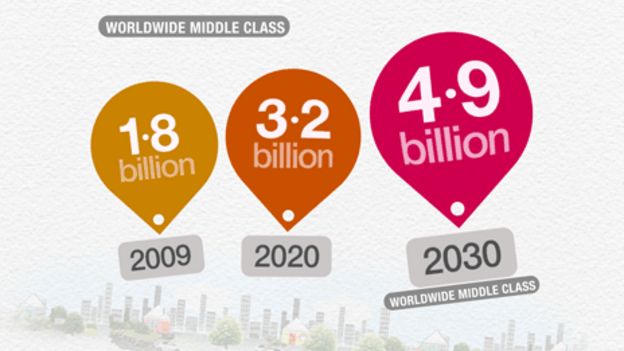
There is untapped potential out there. As these 4 factors come together we will see a much larger global middle class, which means more demand for basic services, a larger global economy and more opportunity.

With fully deployed green tech we don’t need to worry about a lack of resources, there is enough sunshine falling on the earth to supply every human being with electricity, food and clean water.

It all comes down to the 4 factors; smartphones, solar, cheap batteries and YouTube.

Ben Alexander

June . 2017

Which curve are you on?

Check this out:

Residential / rooftop solar is on the beginning of the same upward curve. It will closely follow the growth curve of electric cars:

This is why I’m in the solar biz. It will start with 1 or 2 homes in every subdivision going solar, then more and more people will follow suit.

The first adopters will pay off their panels by 2022, panels that will generate electricity for decades. Late adopters will waste thousands of dollars, sending funds to an electric company that will never give you any return on your hard-earned money.

Solar costs less than your monthly electric bill, right now. 

When the panels are paid off in a few short years? It can be thousands of dollars per year BACK in your pocket.

How do I know? I sell these systems to homeowners every DAY.

Ben Alexander

June . 2017